- Membership |
- Shop |
- Calendar |
- Donate

A resource for reliable information about significant people, places, events, and things in Minnesota history.
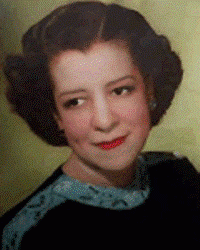
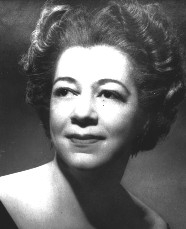
Marvel Cooke.
Marvel Cooke was a pioneering journalist and political activist who spent her groundbreaking career in a world where she was often the only female African American. Talking about her work environment for the white-owned newspaper the Compass, she told biographer Kay Mills in 1988, ''there were no black workers there and no women."
Marvel Jackson was born in 1901, the first African American child to be born in the city of Mankato. Her father, Madison Jackson, was the son of a free Ohio farmer. A graduate of the Ohio State University Law School, Madison could not get a job as a lawyer because of racist hiring practices; as a result, he worked as a railroad porter. Marvel's mother, Amy Wood Jackson, was a teacher.
Jackson moved with her parents to Minneapolis in 1907. They were the first African American residents of the Prospect Park neighborhood. Jackson recalled public meetings and attempts to get her family to leave, but her parents refused. Over time the community grew to accept Marvel and her family.
Jackson was the first African American ever to attend the Sydney Pratt Elementary School in Prospect Park. Her sisters were the second and third. Jackson said in a 1989 interview, "It didn't bother me at all. I'm by nature an outgoing person, and I had a lot of friends." She majored in English at the University of Minnesota, where she was one of five African Americans who graduated in 1925. While at the university, however, Marvel felt her best friend throughout her childhood pretended not to know her rather than explain their inter-racial friendship to her boyfriend. It was then that Jackson decided, as she stated in an interview with the Washington Press Club years later, "I am not going to live in Minneapolis; I won't stay there." She decided to move to Harlem, saying, "It wasn't south, but it was black, and I decided I wanted to come to Harlem." She moved there in 1926 to work as an editorial assistant for W. E. B. DuBois at the NAACP publication the Crisis.
In 1928 Jackson became the New York Amsterdam News's first female reporter. She helped organize the first union at a black-owned newspaper while working there. In 1931 she organized a successful eleven-week strike at the paper. Jailed twice for picketing, Jackson was quoted as saying, "the bosses are not necessarily in your corner, even if they are your own color."
Jackson's political beliefs influenced her personal life as well. She ended her engagement to fellow Minnesotan Roy Wilkins, a prominent civil rights activist, and later told a biographer she made the decision because he was politically more conservative than she was. She went on to wed world-class sprinter and Olympic-champion sailor Cecil Cooke in 1929.
Cooke's writing quickly made her a star in mainstream media. She got a job at the Compass, a white-owned newspaper, where she was the only African American and the only female reporter. She won recognition for her undercover reporting on New York City domestic workers, and exposed "the horrible working conditions to which these women were subjected." In her article "The Bronx Slave Market," Cooke stated, "I was part of the Bronx Slave Market long enough to experience all the viciousness and indignity of system which forces women to the streets in search of work."
In 1953 Cooke left the Compass and was elected as New York Director of the Council of Arts, Sciences, and Professions. In a 1989 interview she described both jobs as the happiest time of her life. During that period, Cooke decided to devote her life to political activism and became a member of the Communist Party. In 1954 Joseph McCarthy forced her to testify twice before the United States Senate's Subcommittee on Investigations because of her political beliefs.
The investigation did not slow down Cooke's political career. She worked as the national legal defense secretary for 1960s radical Angela Davis and continued her political activism throughout her life, serving as national vice chairman of the American–Soviet Friendship Committee from 1990 to 1998.
Marvel Cooke died of leukemia on November 29, 2000, in Harlem, at the age of ninety-nine. She spent the last two years of her life writing for the New World Review and helping to sponsor political events. Cooke's accomplishments and achievements in journalism, politics, and civil rights made her an important figure in each of those fields.

Baker, Ella, and Marvel Cooke. "The Bronx Slave Market." Crisis 42, no. 11 (November 1935): 330, 331, 340, 341 .
Currie, Kathleen. "Women in Journalism: Interviewees; Marvel Cooke." Washington Press Club Foundation.
http://www.wpcf.org/marvel-cooke/
Mchie, Benjamin. "Writer, Teacher and Activist, Marvel Cooke." African-American Registry.
http://www.aaregistry.org/historic_events/view/writer-teacher-and-activist-marvel-cooke
Woo, Elaine. "Marvel Cooke; Pioneering Black Journalist, Political Activist." Los Angeles Times, December 06, 2000.
https://www.latimes.com/archives/la-xpm-2000-dec-06-me-61800-story.html
 |
 |
In 1950, Cooke begins a two-year stint as the first and only African American woman at a white-owned newspaper (the Compass).
Marvel Jackson is born in Mankato.
Jackson graduates from the University of Minnesota with a bachelor's degree in English.
Jackson moves to Harlem, New York, where she is hired as an editorial assistant for the Crisis, a NAACP publication.
Jackson is hired as secretary to the women's editor at the New York Amsterdam News. She becomes the first female reporter in the newspaper's forty-year history.
Jackson breaks off her engagement to Roy Wilkins. She later marries Cecil Cooke.
Cooke engages in a successful eleven-week guild strike against the Amsterdam News. She is later jailed twice for picketing the paper.
Cooke takes a job as assistant managing editor of a new publication founded by Adam Clayton Powell called the People's Voice.
Cooke is hired as the first and only female African American reporter and feature writer at the white-owned New York City newspaper the Compass.
Cooke is elected as New York Director of the Council of Arts, Sciences, and Professions. Later that year she joins the Communist Party.
Cooke works as the national legal defense secretary for the Angela Davis Defense Committee.
Marvel Jackson Cooke dies of leukemia at the age of ninety-nine in Harlem, New York.
Made possible by the Arts and Cultural Heritage Fund through the vote of Minnesotans on November 4, 2008. Administered by the Minnesota Historical Society.
Minnesota Historical Society • 345 W. Kellogg Blvd., St. Paul, MN 55102-1906 (Map) • 651-259-3000 © MNHS.
Send questions or comments to mnopedia![[at]](/sites/all/modules/spamspan/image.gif) mnhs [dot] org. View our Privacy Policy.
mnhs [dot] org. View our Privacy Policy.